by Muhammad hussain | Jul 25, 2026 | Free Pdf Tools
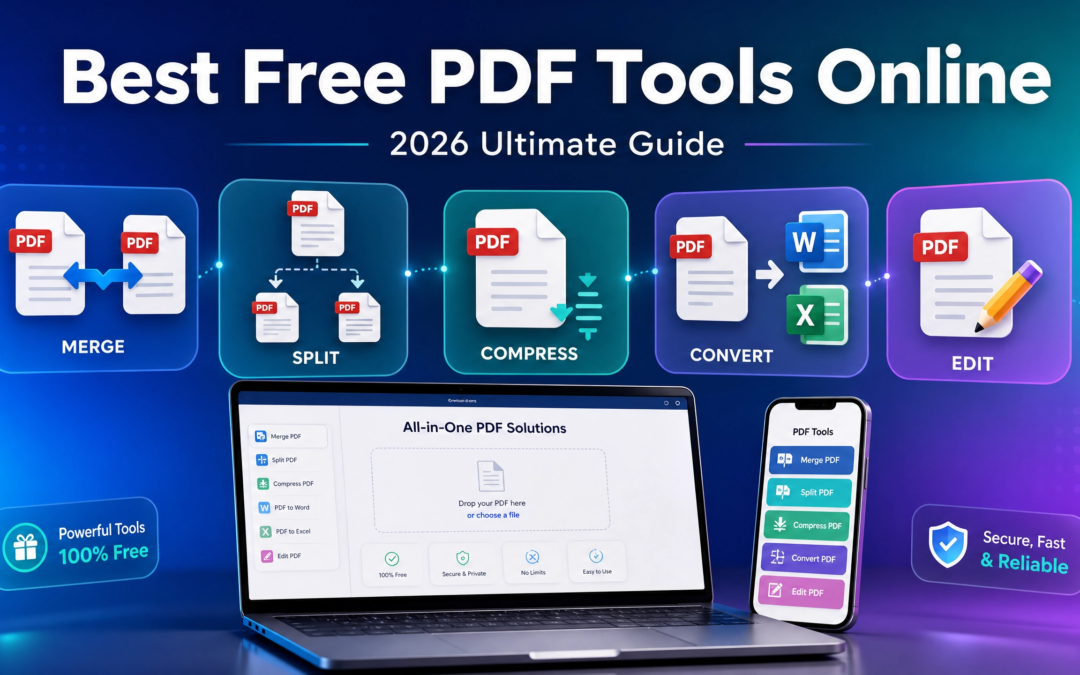
Best Free PDF Tools Online
Are you tired of dealing with expensive software just to edit or convert a simple document? You are not alone. Fortunately, finding the best free PDF tools online has never been easier. Whether you need to compress a large file for an email, merge several documents into one, or convert a PDF into an editable Word file, modern web-based solutions offer powerful capabilities right in your browser. In this comprehensive guide, we will explore the top free PDF tools online, their features, and how they can streamline your digital workflow.
Why Choose the Best Free PDF Tools Online?
For years, managing PDF files required installing heavy, expensive software on your computer. Today, the landscape has changed dramatically. The best free PDF tools online provide instant access to essential document management features without the need for downloads or complex setups.
Using these browser-based tools offers several significant advantages:
•Zero Cost: You can access professional-grade features without paying subscription fees or dealing with hidden costs.
•Convenience: Process your documents from any device—PC, Mac, or mobile—without installing additional applications.
•Speed: Upload your file, select your desired action, and download the result in seconds.
•Security: Reputable tools process files securely, often deleting them automatically after the task is complete to protect your privacy.
These benefits make online PDF utilities indispensable for students, professionals, and business owners alike.
Top Features of Modern PDF Utilities
When evaluating the best free PDF tools online, it is crucial to look for platforms that offer a comprehensive suite of features. A reliable platform should handle various document tasks seamlessly.
PDF Conversion Capabilities
One of the most common needs is converting files between different formats. High-quality tools allow you to turn your PDFs into editable Word documents, Excel spreadsheets, or PowerPoint presentations. Conversely, you can easily convert Word files or images into PDF format to ensure document consistency across different devices.
Editing and Annotation
Sometimes, you just need to make a quick edit or add a signature. The best free PDF tools online include robust editors that let you modify text, add images, draw shapes, and annotate documents directly in your browser. This eliminates the need for dedicated desktop software for minor adjustments.
Organizing and Optimizing Files
Managing large documents is another area where these tools excel. You can effortlessly merge multiple PDF files into a single document or split a large file into separate pages. Additionally, PDF compression tools are essential for reducing file sizes, making it easier to attach documents to emails or upload them to web forms without sacrificing quality.
How to Use Free PDF Tools Effectively
Getting started with these online utilities is straightforward. Most platforms follow a simple three-step process. First, you upload your document by selecting it from your device or dragging and dropping it into the browser window. Next, you choose the specific action you want to perform, such as converting, compressing, or merging. Finally, you download the processed file, which is usually ready in just a few seconds.
To maximize efficiency, consider organizing your documents before uploading them. If you are merging files, ensure they are in the correct order. When compressing, check the output quality to ensure it meets your requirements.
Security and Privacy Considerations
When working with sensitive documents, security is a primary concern. Fortunately, many of the best free PDF tools online prioritize user privacy. They use secure encryption protocols for data transfer and process files in secure environments.
Many reputable platforms operate entirely within your browser, meaning your files never actually leave your computer. Others that upload files to their servers typically delete them automatically after a short period, usually within an hour. Always check the privacy policy of the tool you are using to ensure it aligns with your security needs.
FAQs About Free PDF Tools
Are online PDF tools really free to use?
Yes, most reputable platforms offer core features like conversion, merging, and compression completely free of charge. Some may offer premium features, but the essential tools are typically available without any cost or registration.
Can I edit a PDF online without downloading software?
Absolutely. The best free PDF tools online allow you to add text, images, signatures, and annotations directly within your web browser. This is perfect for quick edits or signing documents on the go.
How secure are free online PDF converters?
Reputable online PDF converters use SSL encryption to protect your data during transfer. Furthermore, many services automatically delete your files from their servers shortly after processing to ensure your privacy.
What is the best way to compress a large PDF file?
To compress a large PDF, use a dedicated compression tool available online. These tools reduce the file size by optimizing images and removing unnecessary data, making it easier to share while maintaining readable quality.
Conclusion
Navigating the world of document management does not have to be complicated or expensive. The best free PDF tools online provide a powerful, accessible, and secure way to handle all your PDF needs. From converting formats and editing text to compressing files and merging documents, these browser-based utilities offer everything you need to stay productive. Next time you face a PDF challenge, skip the expensive software downloads and try a reliable online tool instead.

by Muhammad hussain | Jul 24, 2026 | AI
The Rise of AI Writers and How to Spot Them
The explosion of AI writing tools like ChatGPT, Claude, and Gemini has fundamentally changed how we create content. For writers, these tools offer incredible brainstorming capabilities. But for educators, publishers, and search engines, the influx of machine-generated text presents a major challenge.
Universities are cracking down on AI essays, and Google has explicitly warned that AI-generated content lacking original value will be penalized in search rankings. As a result, the ability to detect AI-generated content has become an essential skill in 2026.
In this guide, we will explore how AI text detectors work, the signs of machine writing, and the best free tools you can use to check your content.
How Do AI Text Detectors Work?
AI text detectors do not look for watermarks or metadata. Instead, they analyze the linguistic patterns of your writing. Large Language Models (LLMs) write in a very specific, statistically predictable way. Detectors look for two main factors:
- Perplexity: This measures how surprised the AI is by the next word in a sentence. Humans use unpredictable, creative word choices (high perplexity). AI models choose the most statistically probable words (low perplexity).
- Burstiness: This measures the variation in sentence length and structure. Humans naturally mix very short sentences with long, complex ones (high burstiness). AI tends to write sentences that are all roughly the same length and structure (low burstiness).
If your text has low perplexity and low burstiness, an AI detector will flag it as machine-generated.
Signs That Text is AI-Generated
Before using a software checker, you can often spot AI writing by looking for these tell-tale signs:
| Characteristic | Description |
|---|
| Overly Formal Tone | AI rarely uses casual language, slang, or conversational idioms unless specifically prompted. |
| Lack of Personal Experience | AI cannot draw on real-life anecdotes. The text will feel generic and lack specific, verifiable details. |
| Repetitive Structure | AI often starts sentences the same way (e.g., "Furthermore," "In addition," "It is important to note"). |
| Absence of Errors | AI is grammatically perfect. A complete lack of minor typos or conversational flow can be a red flag. |
| Empty Conclusions | AI often ends paragraphs with generic summary statements like "Ultimately, this shows that X is important." |
The Best detect AI-generated content
If you need definitive proof of whether text is AI-generated, you need a reliable checker. Here are the top tools available:
1. Jollondon detect AI-generated content (Best Overall)
The Jollondon AI Content Checker is a powerful, 100% free tool that provides sentence-level analysis. It doesn't just give you a generic percentage; it highlights exactly which sentences are likely AI-generated and which are human-written. It uses advanced NLP to evaluate perplexity, burstiness, and vocabulary diversity.
2. Turnitin (For Educators)
Turnitin is the gold standard for academic institutions. It combines plagiarism detection with AI writing indicators. However, it is not free for individual students or bloggers.
3. GPTZero
GPTZero was one of the first AI detectors to go viral. It focuses heavily on perplexity and burstiness. While effective, it often produces false positives on short texts.
How to "Humanize" Your Writing
If you use AI to brainstorm or outline, you must rewrite the final draft to ensure it passes AI detectors. Here is how to make your text more human:
- Vary your sentence length: Intentionally mix a one-word sentence with a long, 25-word sentence.
- Inject personal anecdotes: AI cannot replicate your life experiences. Add "I" statements and specific memories.
- Use idioms and conversational language: Break the robotic tone by writing the way you actually speak.
- Run it through a checker: Before submitting your essay or publishing your blog post, paste it into the Jollondon AI Content Checker. Review the highlighted red sentences and rewrite them until the document reads 100% human.
Conclusion
As AI writing tools become more sophisticated, detecting machine-generated text will only get harder. However, by understanding how these tools write (low perplexity and burstiness) and using free resources like the Jollondon AI Content Checker, you can ensure your work remains authentic, original, and compliant with academic and SEO standards.
by Muhammad hussain | Jul 24, 2026 | Free Pdf Tools
The Ultimate Toolkit for PDF Productivity
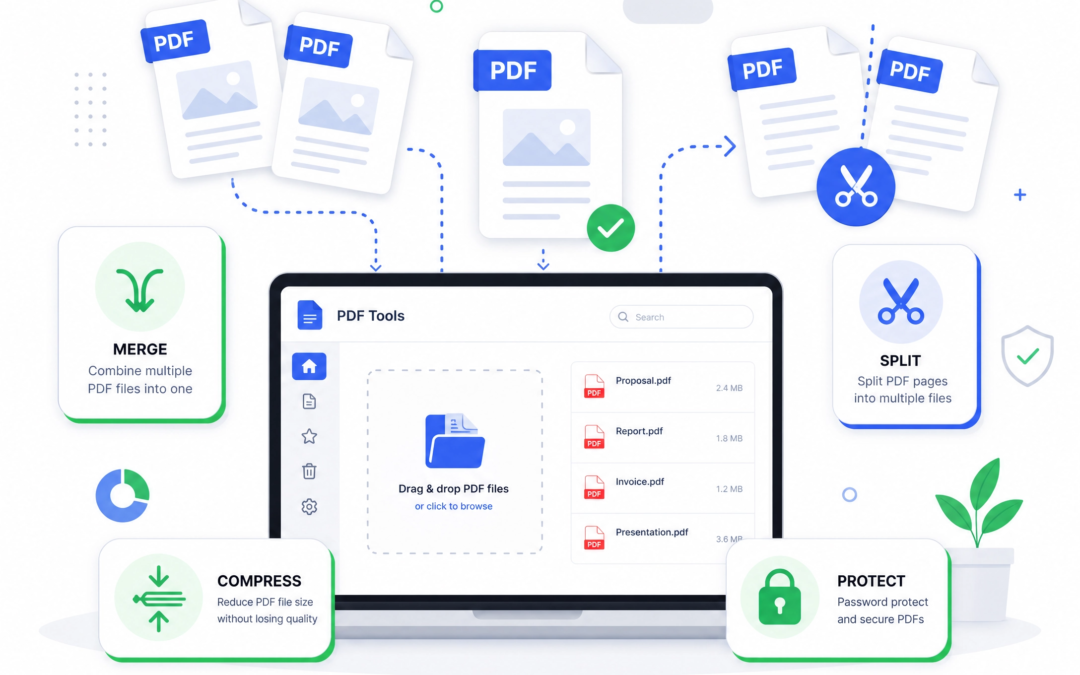
Are you looking for free PDF tools. Portable Document Format (PDF) is the universal standard for sharing documents. But while it is great for preserving layout, it is terrible for editing. If you need to change text, extract images, combine files, or reduce file sizes, you usually have to pay for expensive software like Adobe Acrobat.
In 2026, there is no longer any reason to pay for PDF manipulation. The web is full of powerful, free PDF tools that run directly in your browser. In this guide, we have compiled the 10 best free PDF tools you need to boost your productivity immediately.
Why Use Online PDF Tools?
Online PDF tools offer several massive advantages over desktop software:
| Advantage | Explanation |
|---|
| Cost | They are 100% free, saving you hundreds of dollars a year on software subscriptions. |
| Accessibility | You can access them from any device (Mac, Windows, Linux, Mobile) with an internet connection. |
| Security | The best tools process your files securely and delete them immediately after conversion. |
| No Downloads | They do not require installing bloatware on your computer. |
The Top 10 free PDF tools
1. PDF to JPG Converter
Sometimes you need to extract images from a PDF, or you need to turn a scanned document into an image file for web sharing. A PDF to JPG converter handles this in seconds. Simply upload your document, select the pages, and download high-quality image files.
2. PDF to Word Converter
When you receive a locked PDF and need to edit the text, you need a converter. A good PDF to Word tool will turn your static document into a fully editable .docx file while preserving the original formatting as much as possible.
3. PDF to Excel
If you have a PDF invoice or financial report filled with tables, copying them into Excel manually is a nightmare. A PDF to Excel converter uses Optical Character Recognition (OCR) to extract the data and format it perfectly into spreadsheet cells.
4. JPG to PDF
If you have scanned a physical document or combined several photos, you likely need to send them as a single file. The JPG to PDF tool allows you to upload multiple images and combine them into one neat PDF document.
5. Merge PDF
Need to combine several different reports into one presentation? The Merge PDF tool lets you drag and drop multiple files and rearrange their order before combining them into a single, organized document.
6. Split PDF
Conversely, if you have a massive PDF document and only need three specific pages, a Split PDF tool allows you to extract exactly the pages you need into a new, smaller file.
7. Compress PDF
Email attachments usually have a 25MB limit. If your high-resolution PDF is too large to send, use a Compress PDF tool. It reduces the file size drastically without destroying the readability of the text or images.
8. Unlock / Protect PDF
Need to add password protection to a sensitive document? Or need to remove a password you've forgotten? The PDF Protect/Unlock tool handles both encryption and decryption securely.
9. Sign PDF
Many online tools now allow you to draw your signature with a mouse or upload an image of your signature, and place it directly onto a PDF document.
10. OCR (Optical Character Recognition)
If your PDF is just a scanned image, the text cannot be searched or copied. OCR tools scan the image and convert it into searchable, highlightable text.
Jollondon: Your All-in-One PDF Suite
While there are many sites that offer one or two of these features, managing subscriptions across multiple websites is inefficient. Jollondon provides an all-in-one suite of free PDF tools.
You can convert, merge, split, compress, and protect your documents without ever creating an account or entering a credit card number. We also offer AI-powered tools alongside our PDF suite, such as an AI Academic Citation Generator and an AI CV Builder.
Conclusion
Stop paying for software you only use once a month. Bookmark this guide and start using free online PDF tools to handle your document management needs in 2026. They are faster, safer, and completely free.