Technical SEO Complete Guide

Technical SEO Complete Guide

Technical SEO Complete Guide: Optimise Your Website for Better Rankings

Introduction: What Is Technical SEO?

If you want to learn the Technical SEO Complete Guide, then you are in the right place. Technical SEO is the foundation of every successful search engine optimisation strategy. It focuses on improving your website’s technical structure so search engines can crawl, index, and rank your pages effectively.

At JOL London, we treat technical SEO as the backbone of long-term ranking success, ensuring websites meet Google’s latest standards.

Why Technical SEO Is Important

Without proper technical SEO:

  • Search engines may not crawl your site correctly

  • Pages may not appear in search results

  • Rankings and traffic can drop significantly

A technically optimised website:
✔ Loads faster
✔ Is mobile-friendly
✔ Is secure
✔ Ranks higher

Technical SEO Complete Guide: Step-by-Step

Below is a comprehensive technical SEO guide used by professional SEO experts.

1. Website Crawling & Indexing

Search engines use bots to crawl your website and store pages in their index.

✔ Ensure important pages are crawlable
✔ Avoid blocking pages with robots.txt unnecessarily
✔ Use XML sitemaps

Best Practice:
Submit your sitemap via Google Search Console.

2. XML Sitemap Optimisation

An XML sitemap helps search engines understand your site structure.

✔ Include all important pages
✔ Exclude thin or duplicate pages
✔ Update automatically

JOL London ensures fully optimised sitemap implementation.

3. Robots.txt File Optimisation

The robots.txt file tells search engines which pages to crawl or ignore.

✔ Block admin and duplicate pages
✔ Allow important resources (CSS & JS)
✔ Avoid accidental blocking

Incorrect robots.txt settings can destroy rankings.

4. Website Speed & Performance

Page speed is a confirmed Google ranking factor.

Improve speed by:

  • Image compression

  • Browser caching

  • Minifying CSS & JavaScript

  • Using fast hosting

Recommended: Core Web Vitals optimisation.

5. Mobile-Friendly & Responsive Design

Google follows mobile-first indexing.

✔ Responsive design
✔ Touch-friendly navigation
✔ Fast mobile loading

A poor mobile experience negatively impacts rankings.

6. HTTPS & Website Security

Security is essential for SEO and user trust.

✔ SSL certificate (HTTPS)
✔ Secure login pages
✔ Protection from malware

Google prioritises secure websites.

7. URL Structure & Canonical Tags

SEO-friendly URLs:

  • Are short and readable

  • Include keywords

  • Avoid duplicate variations

Use canonical tags to prevent duplicate content issues.

8. Fix Duplicate Content Issues

Duplicate content confuses search engines.

✔ Use canonical URLs
✔ Avoid duplicate parameters
✔ Implement proper redirects

9. 404 Errors & Redirects (301)

Broken links harm SEO.

✔ Fix 404 errors
✔ Use 301 redirects for moved pages
✔ Maintain link equity

JOL London performs regular technical audits to catch errors early.

10. Structured Data (Schema Markup)

Schema markup helps search engines understand content better.

Benefits:
✔ Rich snippets
✔ Higher click-through rate
✔ Improved visibility

11. Core Web Vitals Optimisation

Google evaluates:

  • LCP (Largest Contentful Paint)

  • FID (First Input Delay)

  • CLS (Cumulative Layout Shift)

Optimising these improves user experience and rankings.

How Long Does Technical SEO Take to Show Results?

Typical timeline:

  • 1–2 weeks: Audit & fixes

  • 30–60 days: Crawl & index improvements

  • 60–90 days: Ranking stability

Technical SEO delivers long-term SEO success.

Why Choose JOL London for Technical SEO?

JOL London is a top-rated SEO, web development, and digital marketing company, trusted by businesses worldwide.

Our Technical SEO Services Include:

✔ Full technical SEO audit
✔ Speed & Core Web Vitals optimisation
✔ Crawl & index fixes
✔ Schema implementation
✔ Ongoing monitoring

Final Thoughts

This Technical SEO Complete Guide shows why technical optimisation is critical for sustainable SEO growth. When combined with strong content and backlinks, technical SEO becomes a powerful ranking driver.

For expert-led technical SEO, trust JOL London.

On Page SEO Checklist

On Page SEO Checklist

On Page SEO Checklist: The Ultimate Guide to Optimise Your Website

Introduction: Why On Page SEO Matters?

On Page SEO Checklist is one of the most critical elements of search engine optimisation. It focuses on optimising individual web pages to rank higher on search engines and attract relevant traffic.

At JOL London, we use a proven on page SEO checklist to ensure websites are fully optimised for search engines and users alike.

What Is On Page SEO?

On Page SEO refers to all optimisation efforts made directly on your website, including content, HTML source code, and site structure. Unlike off-page SEO, you have full control over these elements.

When done correctly, on page SEO:

  • Improves keyword rankings
  • Enhances user experience
  • Increases organic traffic
  • Boosts conversion rates

Complete On Page SEO Checklist

Below is a practical and effective on page SEO checklist followed by SEO professionals.

1. Keyword Research & Placement

Every page should target one primary focus keyphrase and related keywords.

Use the focus keyphrase in:

  • Page title
  • Meta description
  • URL
  • First 100 words
  • Headings (H1, H2)
  • Image alt text

Yoast SEO recommends natural usage and avoiding keyword stuffing.

2. SEO-Friendly Title Tag

Your title tag is a major ranking factor.

Best practices:

  • Keep it under 60 characters
  • Include the focus keyphrase
  • Make it compelling for clicks

Example:
On Page SEO Checklist for Higher Google Rankings

3. Optimised Meta Description

While meta descriptions don’t directly affect rankings, they strongly impact click-through rate (CTR).

✔ Keep under 160 characters
✔ Include focus keyphrase
✔ Write for humans, not bots

4. Proper URL Structure

SEO-friendly URLs are:

  • Short and readable
  • Keyword-rich
  • Free of unnecessary numbers or symbols

Good example:
www.jollondon.com/on-page-seo-checklist

5. Use Heading Tags Correctly (H1–H6)

Heading tags help search engines understand content hierarchy.

✔ One H1 per page
✔ Use H2 and H3 for subtopics
✔ Include keywords naturally

This also improves readability for users.

6. High-Quality, Optimised Content

Content is the foundation of on page SEO.

Your content should be:

  • Original and informative
  • Well-structured
  • Easy to read
  • Focused on search intent

At JOL London, we create content that satisfies both users and search engines.

7. Internal Linking Strategy

Internal links help:

  • Spread link equity
  • Improve crawlability
  • Increase time on site

✔ Link to relevant pages
✔ Use descriptive anchor text
✔ Avoid over-linking

8. Image Optimisation

Images can boost SEO if properly optimised.

✔ Compress images for speed
✔ Use descriptive file names
✔ Add keyword-rich alt text

Example alt text:
On Page SEO Checklist by JOL London

9. Page Speed Optimisation

Google prioritises fast-loading websites.

Improve speed by:

  • Optimising images
  • Using caching
  • Minimising CSS & JavaScript
  • Choosing quality hosting

10. Mobile-Friendliness

Google uses mobile-first indexing, meaning your mobile version is the primary ranking version.

✔ Responsive design
✔ Easy navigation
✔ Fast mobile loading

11. Use Schema Markup (Optional but Powerful)

Schema markup helps search engines better understand your content and can improve visibility with rich snippets.

How Long Does On Page SEO Take to Show Results?

Typical timeline:

  • 1–2 weeks: Technical fixes
  • 30–60 days: Ranking improvements
  • 60–90 days: Traffic growth

Consistency is key.

Why Choose JOL London for On Page SEO?

JOL London is a top-rated SEO, web development, and digital marketing company, delivering measurable SEO results.

Our On Page SEO Services Include:

✔ In-depth SEO audits
✔ Keyword optimisation
✔ Content optimisation
✔ Technical SEO improvements
✔ Yoast SEO compliance

Final Thoughts

Following a proper on page SEO checklist ensures your website is optimised, competitive, and future-ready. When combined with expert strategy, on page SEO becomes a powerful driver of organic growth.

If you want professional, results-driven SEO, JOL London is your trusted partner.

How SEO Works

How SEO Works

How SEO Works: A Complete Guide to Search Engine Optimisation

Introduction: Understanding How SEO Works

In this blog, you will completely learn Learn how SEO works step by step. Discover how search engines rank websites and how JOL London helps businesses grow with SEO. Search Engine Optimisation (SEO) is the process of improving your website’s visibility on search engines like Google, Bing, and Yahoo. When done correctly, SEO helps your website appear higher in search results, attract targeted traffic, and generate consistent business growth.

At JOL London, we specialise in result-driven SEO strategies that help businesses rank higher, convert better, and scale faster in competitive markets.

How SEO Works: Step-by-Step Explanation

SEO works by aligning your website with search engine algorithms that determine which pages deserve top positions. These algorithms focus on relevance, quality, and user experience.

Let’s break it down clearly

1. How Search Engines Discover Websites (Crawling)

Search engines use automated bots (called crawlers or spiders) to scan the internet. These bots:

  • Discover new web pages

  • Follow internal and external links

  • Collect data about your content

If your website is well-structured and technically sound, search engines can crawl it more efficiently.

JOL London ensures:

  • Clean site structure
  • Fast loading speed
  • Proper internal linking

2. How Search Engines Understand Content (Indexing)

Once crawled, your website pages are stored in a massive database known as the search index.

For proper indexing, search engines analyse:

  • Page titles & meta descriptions

  • Headings (H1, H2, H3)

  • Keywords and context

  • Images and alt text

If your content is clear and relevant, it has a higher chance of being indexed and ranked.

3. How SEO Ranking Works (Algorithms)

After indexing, search engines decide where your website should rank. This is where SEO truly works its magic.

Key ranking factors include:

On-Page SEO

  • Optimised keywords

  • High-quality, original content

  • Proper heading structure

  • Internal linking

Technical SEO

  • Mobile-friendly design

  • Website speed optimisation

  • Secure HTTPS connection

  • Clean URLs

Off-Page SEO

  • High-quality backlinks

  • Brand mentions

  • Online authority & trust signals

At JOL London, we use ethical (white-hat) SEO methods that align with Google’s guidelines.

4. Why Keywords Are Important in SEO

Keywords tell search engines what your page is about. When users search phrases like “How SEO Works”, Google matches those queries with the most relevant content.

Effective keyword strategy includes:

  • Primary focus keyphrase

  • Related and semantic keywords

  • Natural keyword placement

  • User-intent optimisation

Yoast SEO plugin strongly recommends natural usage, and so do we.

5. Content: The Core of How SEO Works

Content is the backbone of SEO success.

Search engines reward content that is:

  • Helpful and informative

  • Well-structured

  • Easy to read

  • Written for humans, not bots

High-quality blogs, service pages, and guides improve:
✔ Rankings
✔ Engagement
✔ Conversions

6. User Experience & SEO

Google now prioritises user experience more than ever.

Important UX factors:

  • Fast loading pages

  • Mobile responsiveness

  • Clear navigation

  • Low bounce rate

SEO works best when users enjoy visiting your website.

How Long Does SEO Take to Show Results?

SEO is a long-term investment, not an overnight solution.

Typical timeline:

  • 30–60 days: Technical & on-page improvements

  • 60–90 days: Ranking movement & traffic growth

  • 3–6 months: Strong keyword positioning

  • 6–12 months: Consistent leads & ROI

JOL London focuses on sustainable growth, not short-term tricks.

Why Choose JOL London for SEO?

JOL London is a top-rated SEO, web development, and digital marketing company delivering measurable results worldwide.

What You Get with JOL London:

✔ Advanced keyword research
✔ Content-led SEO strategy
✔ Technical SEO audits
✔ High-authority link building
✔ Transparent reporting
✔ Long-term ranking growth

Final Thoughts: How SEO Works for Business Growth

SEO works by combining technical optimisation, quality content, and authority building into one powerful digital strategy. When done correctly, it drives organic traffic, builds trust, and increases revenue.

If you want SEO that actually works, JOL London is your trusted digital partner.


SEO for Small Business

SEO for Small Business

SEO for Small Business

Professional SEO for small business allows you to compete with bigger companies, attract more customers, and grow your revenue — without relying on expensive advertising.

At JOL London, we specialise in building profitable SEO systems designed specifically for small and growing businesses.

Why SEO Is Essential for Small Businesses

SEO is the most cost-effective marketing channel available for small businesses.

With the right SEO strategy, you can:

✔ Rank higher on Google
✔ Get consistent organic traffic
✔ Increase sales and enquiries
✔ Build brand trust
✔ Beat larger competitors locally and nationally

How SEO Helps Small Businesses Grow Faster

Targeted Keyword Research

We focus on buyer-intent keywords such as:

  • SEO for small business

  • Affordable SEO services

  • Local SEO for small companies

  • Best SEO agency for small business

  • Small business digital marketing

Website Optimization

We improve:

  • Website speed & performance

  • Mobile usability

  • Page structure & UX

  • Core Web Vitals

  • Technical SEO foundation

Content That Brings Customers

We create content that:

  • Ranks on Google

  • Answers real customer questions

  • Converts visitors into leads

Local SEO for Small Businesses

We optimise your local presence with:

  • Google Business Profile

  • Local citations

  • Location keywords

  • Map pack ranking

Industries We Serve

We provide SEO for small businesses in:

Retail • Medical • Aesthetics • Trades • Law Firms • eCommerce • Consultants • Coaches • Startups

Across:
London • Berkshire • Buckinghamshire • Reading • High Wycombe • Manchester • Birmingham • Leeds • and throughout the UK.

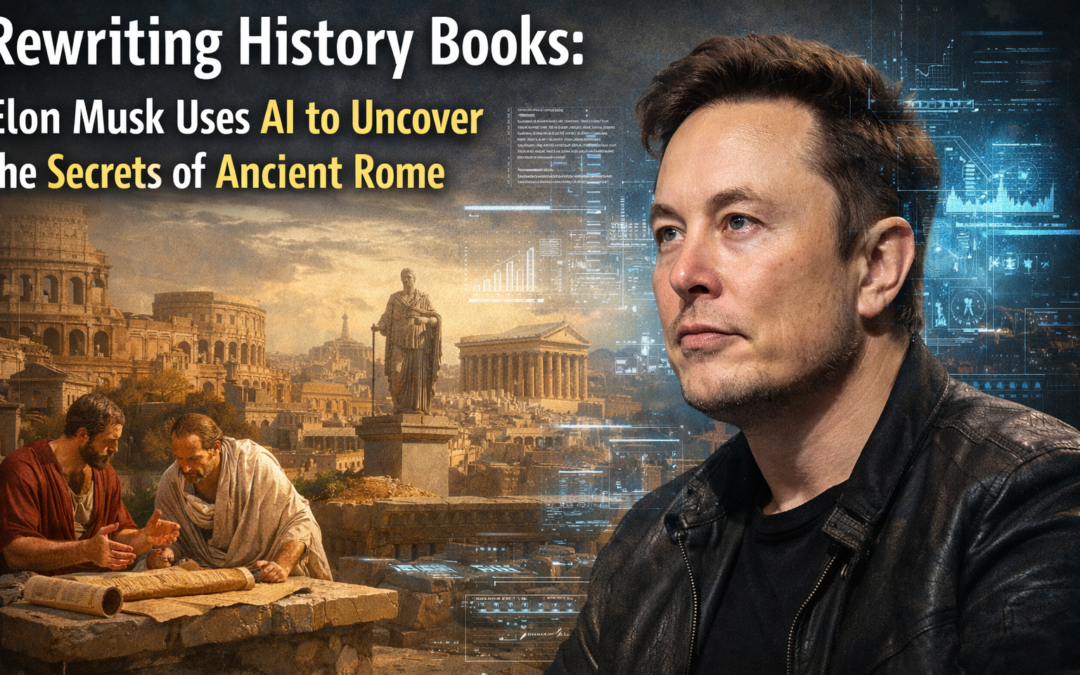
Elon Musk, AI, and the Idea of Rewriting Roman History

Elon Musk, AI, and the Idea of Rewriting Roman History

Elon Musk AI, and the Idea of Rewriting Roman History

What if the story of Ancient Rome — one of the most studied civilizations in human history — is still incomplete?

Imagine an AI powerful enough to scan millions of ancient texts, inscriptions, battle maps, economic records, and archaeological findings at once. Imagine that AI questioning assumptions historians have accepted for centuries. Now imagine someone like Elon Musk standing at the intersection of that technology and human curiosity, asking a simple but disruptive question:

“What if we got parts of history wrong?”

This idea may sound like science fiction, but it is rapidly becoming a serious academic and technological conversation.

Why Ancient Rome Still Matters

Ancient Rome shaped modern law, governance, engineering, language, warfare, and economics. From republic to empire, Rome’s rise and fall is often used as a mirror for modern civilizations.

Yet much of what we know about Rome comes from:

  • Fragmented manuscripts
  • Biased historians writing for emperors
  • Translations made centuries after events occurred
  • Archaeological evidence interpreted through modern assumptions

History, after all, is written by humans — and humans are imperfect.

Elon Musk AI

(Elon Musk’s Way of Thinking: First Principles Applied to History

Elon Musk is known for first‑principles thinking — breaking complex problems down to their most basic truths and rebuilding from there. He used this method to rethink rockets, electric cars, and space travel.

Apply that same mindset to history, and a radical idea emerges:

Instead of trusting summaries of the past, why not analyze the raw data of history itself?

This is where Artificial Intelligence enters the conversation.

How AI Can Rethink Roman History

Modern AI systems are already capable of processing vast datasets far beyond human capacity. When applied to Ancient Rome, AI could:

1. Analyze Lost and Fragmented Texts

AI can reconstruct missing sections of Roman manuscripts by analyzing linguistic patterns, writing styles, and historical context.

2. Detect Bias in Ancient Sources

Many Roman historians glorified emperors or demonized political enemies. AI can cross‑reference multiple accounts and statistically detect exaggeration or propaganda.

3. Reinterpret Archaeological Evidence

By combining satellite imagery, ground‑penetrating radar data, and excavation records, AI could uncover forgotten roads, cities, or military outposts.

4. Simulate Historical Outcomes

AI models can simulate economic systems, population movements, and military strategies to test whether traditional explanations actually make sense.

What if certain battles were won not by genius generals, but by supply chains? What if Rome’s fall was less about invasion and more about algorithmic economic collapse?

Rewriting History vs. Refining It

To be clear, AI wouldn’t erase history — it would refine it.

Just as telescopes didn’t rewrite astronomy but corrected it, AI could help historians:

  • Confirm disputed events
  • Challenge long‑held myths
  • Add nuance to simplified narratives

In true Musk fashion, the goal wouldn’t be comfort — it would be accuracy.

The Controversy: Should AI Touch History?

Critics argue that:

  • History is a human story, not a data problem
  • Algorithms may inherit modern biases
  • Revising history could destabilize cultural identities

These concerns are valid. But every major advancement — from carbon dating to DNA analysis — faced the same resistance.

The question is no longer if AI will be used in historical research, but who controls it and how transparently it is applied.

A Future Where the Past Evolves

Elon Musk has often said that understanding the past is essential for surviving the future — whether that future is on Earth or Mars.

If AI helps us better understand how Rome rose, adapted, failed, and transformed, it may teach modern civilizations something far more valuable than dates and names:

How not to repeat the same mistakes.

History has always evolved as new evidence emerged. AI may simply be the next — and most powerful — tool in that evolution.

Final Thoughts

Elon Musk AI, and the Idea of Rewriting Roman History

The idea of “rewriting history books” sounds dramatic, but in reality, it’s about intellectual honesty.

With AI, humanity gains the ability to look at its past without ego, without tradition, and without fear.

And if there’s one thing Elon Musk’s career proves, it’s this:

Progress begins the moment we stop accepting old answers and start asking better questions.

The Roman Empire may be long gone — but its story is far from finished.